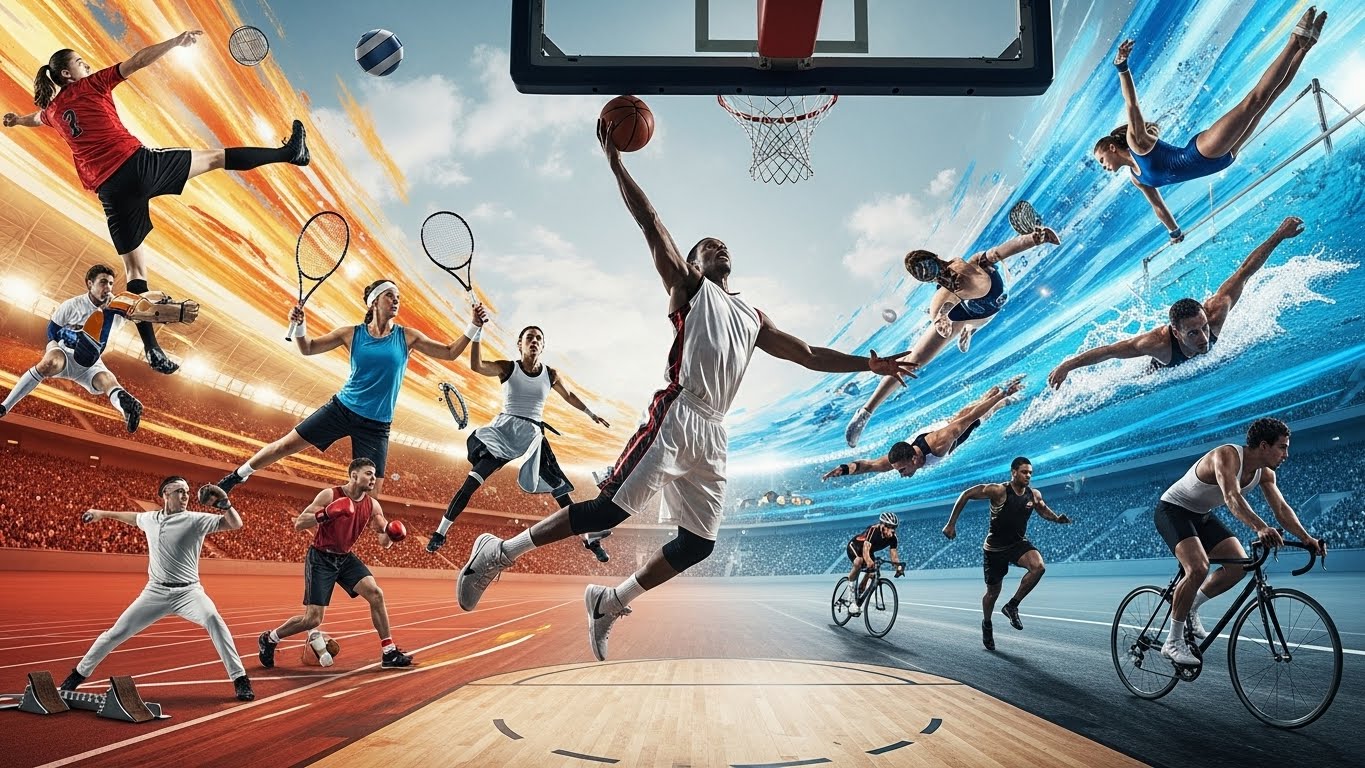






Sports have always been a significant part of human culture and society. From the ancient Olympic Games in Greece to the global spectacle of the World Cup, the world of sports has grown and evolved over thousands of years. In this blog, we will take a deep dive into the evolution of sports, examining how games have transformed from simple recreational activities to professional, multi-billion-dollar industries that captivate audiences around the world.
The Origins of Sports: A Glimpse Into Ancient Civilizations
The roots of modern sports can be traced back to ancient civilizations. While the games played in these early societies were quite different from what we recognize as sports today, they laid the groundwork for the competitive spirit that still thrives in global sporting events.
Ancient Egypt and Mesopotamia
The first known examples of organized sports date back to ancient Egypt and Mesopotamia. In these civilizations, sports were not only recreational but also served as a way to demonstrate physical strength and prepare for battle. Wrestling, running, and archery were practiced by both Egyptians and Mesopotamians, and it is believed that these activities were seen as both a form of entertainment and a way to hone essential combat skills.
Ancient Greece: The Birthplace of the Olympics
The ancient Greeks took sports to another level, and they are credited with organizing the first Olympic Games in 776 BCE. The ancient Olympics were a major religious and cultural event, held every four years in Olympia to honor the Greek god Zeus. Unlike the modern Olympics, which feature a wide variety of sports, the ancient games focused primarily on athletic events like running, wrestling, boxing, and chariot racing.
The Greek ideal of “a sound mind in a sound body” encapsulated their belief in the importance of physical fitness. The Olympic Games became a symbol of unity, as athletes from various Greek city-states would come together to compete. These early games, with their focus on competition, skill, and glory, laid the foundation for modern sports.
The Rise of Organized Sports: From Medieval to Renaissance Periods
While sports remained important during the medieval period, it wasn’t until the Renaissance that they began to resemble the organized games we are familiar with today. The Renaissance was a period of cultural revival in Europe, and this period saw an increased emphasis on physical education and athletic competitions.
The Middle Ages: Jousting and Folk Games
In the Middle Ages, chivalry and knightly combat dominated the sports landscape. Jousting became a popular event, especially in the courts of kings and nobles. Jousting tournaments were held to demonstrate the skill and bravery of knights, and these events were a key part of medieval court life.
Folk games, many of which involved local customs and rituals, were also prevalent during this time. Games like football (soccer) and various ball games were played in rural communities across Europe. These games were often rough and unregulated, serving as entertainment for the masses.
The Renaissance: The Formalization of Sports
By the 16th century, a more structured approach to sports began to emerge. During the Renaissance, physical education gained importance, especially in Italy, where the “gioco del calcio” (a form of soccer) was played. This period also saw the first formal rules being introduced for certain sports, marking a shift toward more organized and regulated competition.
The 17th century saw the growth of various ball games across Europe, and it was in England during the 18th century that many of the modern team sports we know today began to take shape. Cricket, for example, evolved into its current form in England, while other games like rugby and soccer were also refined during this time.
Modern Sports: The Industrial Revolution and Globalization
The Industrial Revolution in the 18th and 19th centuries played a significant role in the development of modern sports. Advances in transportation and communication allowed sports to reach a global audience, and as people’s lifestyles changed due to industrialization, so did their approach to leisure activities.
The Birth of Professional Sports
As cities grew and people moved into urban areas, sports began to shift from informal pastimes to professional endeavors. The establishment of leagues and tournaments became more common, with teams and athletes beginning to earn money for their participation. One of the key turning points in this development was the establishment of the first professional baseball league in the United States in 1876, which paved the way for other professional sports leagues across the world.
The concept of professional sports was also popularized by the rise of newspapers, which provided coverage of local and national games, allowing fans to follow their favorite athletes and teams. The late 19th and early 20th centuries saw the creation of major sports leagues in football, basketball, hockey, and more. These leagues created a structure that allowed athletes to compete at the highest levels, while also offering entertainment to a growing fan base.
The Globalization of Sports
By the mid-20th century, the world had become increasingly interconnected. The invention of television and the widespread availability of radio made it possible for people to follow sports from across the globe. Events like the FIFA World Cup, the Olympics, and the Super Bowl reached millions of viewers, transcending national borders and creating a global sports culture.
Sports also became an avenue for diplomacy and international unity. The Olympics, for example, were used as a platform to promote peace and unity between countries, especially during times of tension such as the Cold War. These events became global spectacles, uniting fans from all walks of life to celebrate athletic achievement and cultural exchange.
The Modern Age of Sports: Technology and Commercialization
In recent decades, technology has dramatically transformed the world of sports. From advanced training techniques to the integration of high-definition television, the way we watch and experience sports has been reshaped by technology.
Technological Advancements in Sports
Technology has revolutionized every aspect of sports, from the equipment used by athletes to the way fans experience the games. Advanced equipment, such as performance-enhancing shoes, high-tech bikes, and smart wearables, has allowed athletes to push the boundaries of what is physically possible. In many sports, technology has also been used to enhance training and recovery, allowing athletes to optimize their performance.
In addition, innovations in broadcasting technology, such as HD and 4K television, have brought fans closer to the action. Augmented reality and virtual reality have begun to make their way into the sports world, allowing fans to experience games from unique perspectives. Technologies like the “goal-line technology” in soccer and “Hawk-Eye” in tennis have also enhanced officiating accuracy, improving fairness and transparency in the game.
The Commercialization of Sports
With the rise of corporate sponsorships, advertising, and the development of lucrative television deals, sports have become big business. Major sports leagues like the NFL, NBA, and Premier League generate billions of dollars in revenue each year, fueling the global sports economy. Sponsorship deals and endorsements have made athletes like Michael Jordan, Cristiano Ronaldo, and LeBron James global icons, earning them wealth and recognition far beyond the playing field.
However, the commercialization of sports has also led to debates about the balance between entertainment and competition. Some argue that the increasing focus on money and branding has compromised the purity of the game, turning athletes into commodities and fans into consumers. The pressure on athletes to perform at their peak has also led to concerns about mental health and the physical toll of professional sports.
The Future of Sports: Evolving Entertainment and Inclusivity
As we look to the future, sports will continue to evolve in response to societal changes, technological advancements, and cultural shifts. The next era of sports may see even more global integration, with new sports emerging from different cultures and regional traditions.
The Rise of Esports
One of the most exciting developments in the sports world is the rise of esports. Competitive video gaming has rapidly grown into a global industry, with major tournaments attracting millions of viewers. Esports players can earn substantial salaries through sponsorships, prize money, and streaming platforms, making it a viable career path for young gamers.
Esports has also introduced a new way of engaging with fans, with virtual tournaments and online streaming allowing viewers to watch games in real-time from anywhere in the world. This new frontier in sports represents a shift toward digital entertainment, where the lines between traditional and virtual sports are increasingly blurred.
Embracing Diversity and Inclusivity
Another key trend for the future of sports is the increasing emphasis on diversity and inclusivity. Women’s sports, for example, have gained significant traction in recent years, with leagues like the WNBA, Women’s World Cup, and women’s tennis tournaments receiving more attention and investment. Athletes from diverse backgrounds and cultures are also becoming more visible in mainstream sports, promoting messages of equality and representation.
In addition, advancements in adaptive sports for athletes with disabilities are improving access and opportunities for people of all abilities to participate in competitive sports. The Paralympic Games and other adaptive sports events continue to grow in prominence, offering athletes with disabilities the chance to showcase their talents on the world stage.
Conclusion: A Shared Passion for Competition
Sports, in their many forms, have always been a way for people to come together, celebrate human achievement, and challenge the limits of physical and mental endurance. Whether through the ancient Olympics, modern professional leagues, or digital esports competitions, the essence of sports remains the same: a celebration of competition, skill, and passion.
As we continue to witness the global evolution of sports, one thing is certain: sports will always play a vital role in shaping cultures, uniting communities, and inspiring individuals. The future of sports may be unpredictable, but the joy of competition and the spirit of camaraderie will remain timeless.